
Beyond the Logo: How Brands Create
Meaningful Connections
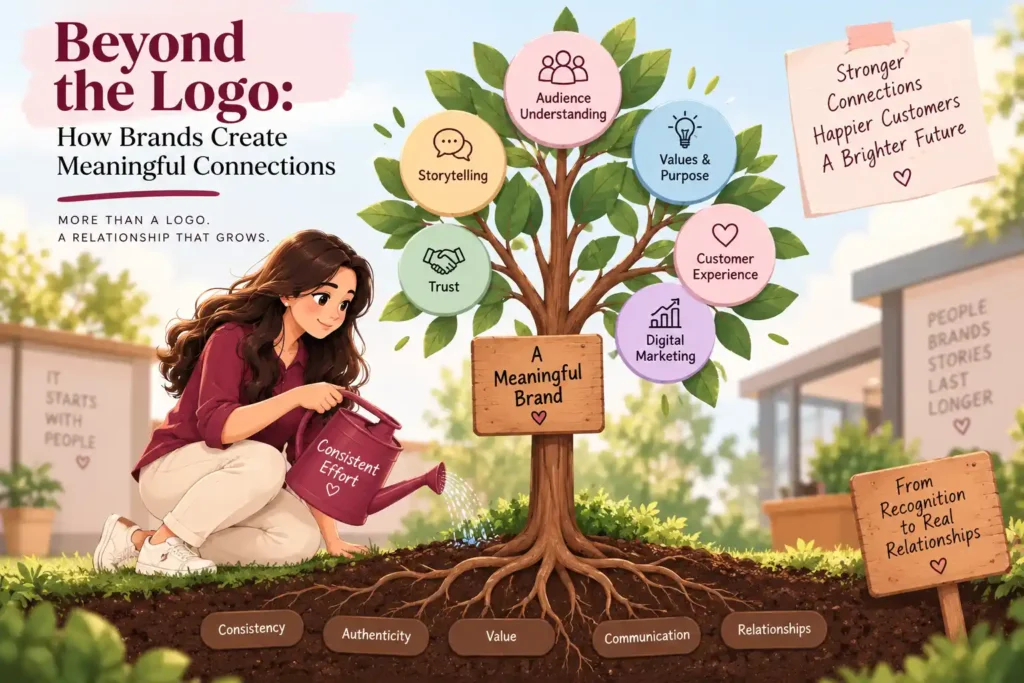
A logo is often the first thing people notice about a business. It helps customers recognize a company and gives the brand a visual identity. But a strong brand is much more than a logo.
People remember brands because of how they communicate, how they make customers feel, the experiences they provide, and the trust they build over time. In today’s competitive digital world, creating meaningful connections can help a business become more recognizable and memorable.
Table of Contents
- What Does Branding Really Mean?
- Why a Logo Is Only the Beginning
- Logo vs. Meaningful Brand
- The Role of Brand Identity
- How Brands Build Emotional Connections
- Building Trust Through Consistency
- The Importance of Customer Experience
- Why Brand Storytelling Matters
- Understanding Your Audience
- How Digital Marketing Strengthens Brand Connections
- Common Branding Mistakes to Avoid
- How to Build a More Meaningful Brand
- Frequently Asked Questions
- Final Thoughts
1. What Does Branding Really Mean?
Branding is the process of creating a clear identity and perception for a business. It includes much more than visual elements such as logos, colors, and typography. A brand is shaped by every interaction a customer has with a business—from seeing a social media post to visiting a website, making a purchase, receiving customer support, and sharing their experience with others. Effective branding brings together visual identity, communication, values, customer experience, and consistency to create a recognizable and memorable business.
2. Why a Logo Is Only the Beginning
A logo plays an important role in helping people identify a business. It can appear on websites, packaging, social media, advertisements, business cards, and other marketing materials.
However, a logo alone cannot communicate everything about a brand.
Imagine two businesses with attractive logos. One provides excellent customer service, communicates clearly, consistently delivers on its promises, and understands its audience. The other has a beautiful logo but provides a confusing and inconsistent customer experience.
Customers experience the whole brand, not just the logo.
This is why businesses need to think beyond visual design and focus on creating a complete brand experience.
3. Logo vs. Meaningful Brand
| Logo | Meaningful Brand |
|---|---|
| Helps people recognize a business | Builds recognition, trust, and connection |
| Focuses mainly on visual identity | Focuses on the overall brand experience |
| Represents the business visually | Communicates personality, values, and purpose |
| Creates a first visual impression | Shapes experiences across multiple touchpoints |
| Mainly communicates through visuals | Communicates through visuals, words, and experiences |
| Has limited emotional impact on its own | Can create stronger emotional associations |
| Cannot establish trust by itself | Consistent experiences can help build trust over time |
| Includes symbols, typography, and colors | Includes logo, messaging, content, service, storytelling, and customer experience |
| Supports brand recognition | Helps create familiarity and lasting relationships |
A logo is an important part of a brand, but meaningful branding happens when every interaction works together to create a consistent and memorable experience.
4. The Role of Brand Identity
Brand identity is the collection of visual and verbal elements that communicate who a business is. It can include: Logo Brand colors Typography Photography style Brand voice Messaging Content style Visual design A consistent identity makes it easier for people to recognize a business across different platforms. For example, when a customer sees the same colors, tone, visual style, and messaging on Instagram, a website, and advertisements, the brand becomes more familiar. Consistency does not mean that every piece of content must look exactly the same. Instead, the important elements should work together and communicate the same overall personality.
5. How Brands Build Emotional Connections
People do not always make decisions based only on features and price. Emotions, experiences, trust, and personal relevance can also influence how people perceive a brand. A meaningful brand tries to understand what its audience values and creates experiences that feel relevant to them. For example, instead of simply saying: “We sell high-quality products.” A brand can communicate why the product matters to its customers, what problem it solves, and how it can improve their everyday experience. This shift from simply selling a product to creating a meaningful experience can make communication more memorable.
It simply needs to be real, relevant, and connected to the audience.
6. Building Trust Through Consistency
Trust is developed through repeated experiences. When a business consistently communicates clearly, delivers what it promises, and maintains a reliable customer experience, people can develop greater confidence in the brand. A simple way to understand this is: Brand Promise → Customer Experience → Customer Expectation → Trust If a business promises one thing but consistently delivers something completely different, the gap can affect how customers perceive the brand. Consistency across content, communication, products, services, and customer support helps create a more reliable brand experience.
7. The Importance of Customer Experience
Every interaction can influence how customers perceive a business. The customer journey may look like this: Discovery → Website → Enquiry → Purchase → Support → Follow-up At each stage, customers form impressions. A website that is difficult to navigate, slow communication, confusing information, or poor customer support can affect the overall experience—even if the business has a strong logo and attractive branding. That is why branding should extend beyond design and include the entire customer journey.
8. Why Brand Storytelling Matters
Every business has a story. It could be the reason the business was started, a problem the founder wanted to solve, a personal experience, or the values that guide the company. Storytelling helps communicate these ideas in a way that people can understand and remember. Instead of only talking about products or services, brands can share: Why the business exists Who it helps Problems it solves Values it believes in Customer experiences Lessons learned along the journey Good storytelling does not mean creating an unrealistic story. It means communicating the real purpose and personality behind the business.
9. Understanding Your Audience
A meaningful brand starts with understanding its audience. Before creating content or designing a visual identity, businesses should consider: Who are the ideal customers? What problems do they face? What are they looking for? What influences their decisions? What type of communication do they respond to? What expectations do they have from the business? When businesses understand their audience, they can create more relevant messaging and experiences. Instead of trying to speak to everyone, a brand can focus on connecting with the people who are most likely to value what it offers.
10. How Digital Marketing Strengthens Brand Connections
Digital marketing gives brands multiple opportunities to communicate with their audience.
SEO
Search engine optimization helps businesses become more visible when people search for relevant information, products, or services.
Social Media Marketing
Social media allows brands to communicate regularly, share their personality, educate their audience, and build conversations.
Content Marketing
Useful content can help businesses demonstrate knowledge, answer customer questions, and provide value before asking for a purchase.
Email Marketing
Email allows brands to maintain direct communication with their audience through updates, educational content, offers, and personalized messages.
Website
A website acts as an important digital touchpoint where customers can learn about the business, explore its services, and decide whether they want to connect. When these digital channels communicate consistently, they can strengthen overall brand recognition and create a more connected customer experience.
11. Common Branding Mistakes to Avoid
Focusing Only on the Logo
A beautiful logo cannot compensate for an inconsistent customer experience.
Changing the Brand Identity Too Often
Frequent changes can make it difficult for people to develop familiarity with a brand.
Talking Only About the Business
Content that focuses only on products and services can feel repetitive. Brands should also provide useful information and address customer needs.
Making Promises the Business Cannot Deliver
A brand promise should match the actual customer experience.
Ignoring Customer Feedback
Customer feedback can provide valuable insights into how people experience a business and where improvements may be needed.
12. How to Build a More Meaningful Brand
Building a meaningful brand does not happen overnight. It develops through consistent actions and communication.
A logo is often the first thing people notice about a business. It helps customers recognize a company and gives the brand a visual identity. But a strong brand is much more than a logo.
People remember brands because of how they communicate, how they make customers feel, the experiences they provide, and the trust they build over time. In today’s competitive digital world, creating meaningful connections can help a business become more recognizable and memorable.
1. Understand Your Audience
Know who you are trying to reach and what matters to them.
2. Define Your Brand Purpose
Clearly understand why your business exists beyond simply making sales.
3. Create a Consistent Identity
Use recognizable colors, typography, visuals, and messaging.
4. Develop a Clear Brand Voice
Decide how your brand should communicate with its audience.
5. Create Valuable Content
Educate, inform, entertain, or solve problems instead of constantly promoting products.
6. Focus on Customer Experience
Make every touchpoint clear, helpful, and consistent.
7. Stay Consistent Over Time
Meaningful connections are built through repeated experiences, not one-time interactions.
13. Frequently Asked Questions
Is a logo important for a brand?
Yes. A logo helps people recognize a business and is an important part of visual identity. However, it is only one element of the overall brand.
What makes a brand memorable?
Consistency, clear communication, useful experiences, strong storytelling, recognizable identity, and meaningful customer interactions can contribute to brand memorability.
What is emotional branding?
Emotional branding focuses on creating experiences and communication that connect with customers on an emotional level rather than focusing only on product features.
Why is consistency important in branding?
Consistency helps customers become familiar with a brand and understand what they can expect from it across different touchpoints.
Can small businesses build meaningful brands?
Yes. Meaningful branding is not limited to large companies. Small businesses can build strong connections through clear communication, consistent branding, quality service, and genuine customer relationships.
How does digital marketing help branding?
Digital marketing provides multiple channels—such as search engines, social media, websites, content, and email—through which businesses can communicate with their audience and build brand awareness.
Final Thoughts
A logo may be the first thing people notice about a brand, but it is rarely the reason they stay connected. Strong brands are built through the small details—how they communicate, how consistently they show up, how they understand their audience, and how they make people feel throughout the customer journey. Your logo helps people recognize you. Your brand experience gives them a reason to remember you. In the end, meaningful branding is not about being seen once. It is about creating an experience that stays with people long after they have seen the logo.
Ready to Grow Your Brand?
Let’s build meaningful brand communication that connect with your audience and drives growth.